The Russian Invasion of Ukraine Has Updated One of My Major Motivations for Writing This Book
Note: *The following is a partial excerpt from a guest post to Hawaii Reporter. You can read the full post here.
The Russian invasion of the Ukraine on February 24, 2022, has updated one of my major motivations for writing this book: why did the violent record of Russian history in the 20th century not prevent Putin from ordering his so-called “special operation”, and why did most of the Russian people become the willing bystanders of this war? Talking to a very diverse selection of Ukrainian citizens on a 2-week journey from Lviv to Kyiv and Odessa in 2016, the then occurring military operation in the Donbas region made it clear to them that Russians hadn’t changed.
Again and again, my brother and I were confronted with the insight that the Germans had learned from their violent history, including their terror regime in the Ukraine from 1941 to 1945, and therefore could be trusted. Yet the Russians had not recognized the legacy of the Stalinist terror in the Ukraine and therefore behave today as they had before.

The unique nature of my manuscript stems from the fact that in the long introduction I attempt to reconstruct how I became slowly aware of the monstrous past of the society I was born and growing up in since 1938 during and after the war. The formative experiences of my childhood are characterized by an unspoken compact of silence Germans practiced on almost all levels of society, including the family. In early 1945 I observed the change in the small town of Gluecksburg in the northern-most art of Germany when Nazi and Wehrmacht uniforms became suddenly replaced by the uniforms of the British occupation army. The seven-year-old boy didn’t understand what it meant because nobody explained it to him. Yet it became obvious to me that something extraordinary had happened because the people in the new uniforms spoke a language I didn’t understand.
I saw thousands of refugees that were coming from the eastern parts of the country (East Prussia, Pomerania, and Silesia), fleeing the approaching Soviet Army. They were seeking refuge in this region in the North that had seen almost no destructive impact during the entire war. But I didn’t see the hundreds of surviving concentration camp inmates who were arriving in late April and early May by train from Neuengamme near Hamburg and by ship from the camp Stutthof in East-Prussia in the harbor of the nearby city Flensburg. By that time, Flensburg had become the last capital of the Third Reich with Grand Admiral Doenitz as Hitler’s successor.

These sick and emaciated survivors must have been seen by many people but were never mentioned when they reminisced about the end of the war. I never heard about these experiences until I read about them in a book that was published in 2015, covering the final days of the war in Flensburg. Recovering these suppressed experiences of historical reality, had to wait a long time until the social prohibition of questioning had been lifted. I don’t know whether all the bodies that were buried in mass graves in 1945 have been by now excavated and identified.
The pervasive silence about the Nazi past that determined my childhood and high school years in Flensburg ended for me when I entered the University in Munich in 1958, studying history, philosophy, and political science. It was the time when critical historical and political studies about the Third Reich began to slowly appear. Yet reflections on the past were often characterized by self-pity about the loss of home and property, experiences of suffering and death on the flight from the east and during the Allied bombing raids on German cities.
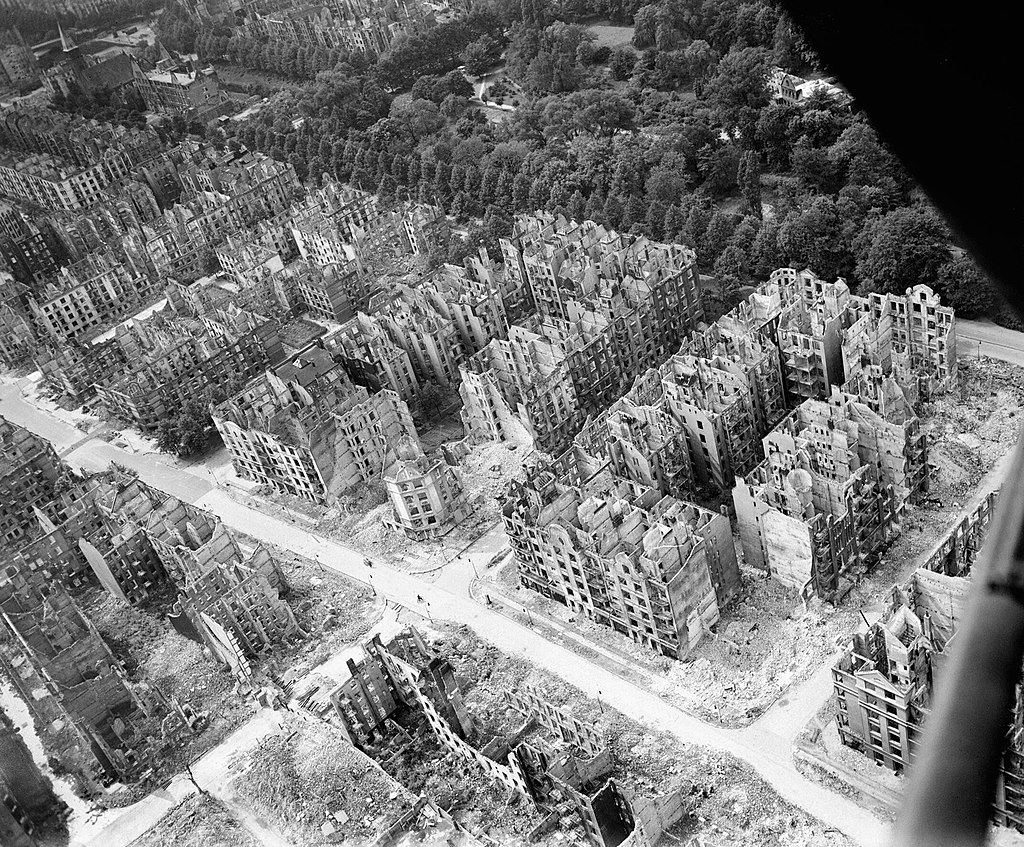
The processing of the past, the by now famous Vergangenheitsbewaeltigung, had not yet started, though the activities of institutional apologies and payment of reparations had been started by the West German government in negotiations with Israel and the Jewish World Congress in the early 1950s. Pressure from the Truman and Eisenhower administrations had facilitated these moves.
The book retraces the stages of the process of German civil society, slowly coming to terms with the record of evil. I have watched this development from the 1960s onward, first from inside Germany and then since 1969 from the USA. As a German living in the USA, I was regularly questioned about the past and couldn’t escape the presence of Nazi Germany as a permanent feature in the American culture industry. Everything connected with Germany had a moral question mark attached to it. As a result of this constant exposure, I became curious about the question of how other societies, including the USA, had processed the negative aspects of their history.